
Memorial Day Drive Season: Gasoline Demand and What It Signals
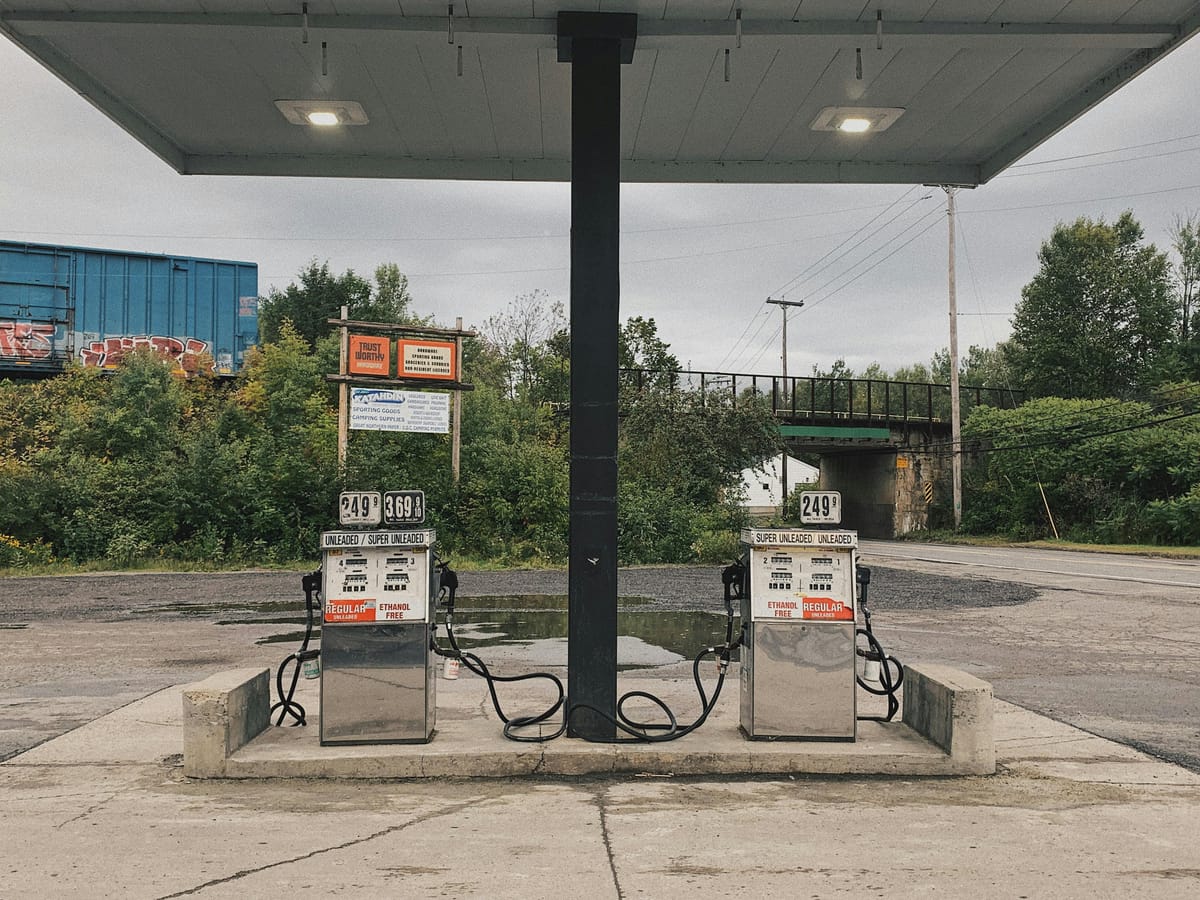
Memorial Day weekend marks the unofficial start of U.S. driving season. Every year, the industry watches gasoline demand data from the EIA's weekly petroleum status report with something approaching ritual significance. The numbers that come in through late May and June are treated as the leading edge of summer demand — and in 2025, they're worth watching more carefully than usual.
The Demand Baseline
U.S. gasoline demand — as measured by product supplied — averaged approximately 8.8–9.0 million bpd through the winter months of 2024–2025. That's slightly below the 2019 (pre-COVID) baseline of 9.3–9.5 million bpd, and well below the multi-decade peak of around 9.6 million bpd seen in the mid-2000s.
The structural decline in demand is real and measurable. The EIA's Annual Energy Outlook has consistently projected gasoline demand to peak and then slowly decline through the 2030s, driven by fleet-average fuel economy improvements under CAFE standards and, increasingly, electric vehicle penetration. The U.S. light-duty EV fleet surpassed 4.5 million vehicles in 2024 — still small relative to 290 million registered vehicles total, but growing at 35–40% annually.
Against this structural backdrop, seasonal demand spikes still matter. Memorial Day to Labor Day historically adds 400,000–600,000 bpd to gasoline demand — a 5–7% seasonal uplift. That swing is still large enough to influence refinery run rates, crude differentials, and regional spot prices.
Gasoline Crack Spreads: What Refiners Are Telling You
The RBOB gasoline crack spread — the difference between RBOB futures prices and WTI — is the market's real-time signal on refining economics and gasoline supply/demand balance. Heading into the 2025 driving season, RBOB cracks have been running in the $18–$22/bbl range, somewhat below the $25–$30/bbl seen at peak summer 2022.
The lower cracks reflect two things: softer demand and higher refinery utilization. U.S. refinery utilization has been running at 87–90% of operable capacity through 2025, meaning domestic refiners are supplying adequate product. The EIA reports U.S. gasoline inventories at roughly 228–232 million barrels as of late April — within the historical 5-year seasonal range, but toward the upper end.
For context, the summer of 2022 was an anomaly: multiple refinery outages (including the Lyondell Houston refinery shutdown), constrained imports, and near-record driving demand combined to push RBOB cracks to $50+/bbl and retail gasoline to over $5.00/gallon nationally. That was a stress event, not a baseline.
The Price at the Pump: Consumer Psychology Meets Oil Markets
National average retail gasoline prices in late April 2025 sit around $3.30–$3.50/gallon — above the psychological $3.00 "cheap" threshold but well below the 2022 peak. Consumer spending on gasoline is relatively inelastic in the short term — people still drive to work, family gatherings, and vacation — but sustained prices above $4.00/gallon demonstrably suppress discretionary driving.
The American Automobile Association (AAA) estimates that U.S. drivers log approximately 500 million vehicle trips over the Memorial Day weekend. That figure has been remarkably stable in recent years, modestly recovering from the COVID dip but plateaued at roughly 2019 levels. The key variable is trip distance: when gas is $3.50, people drive farther. When it's $4.50, they don't.
Regional Differentials: Not All Gasoline Markets Are Equal
The U.S. gasoline market is not a single market — it's a patchwork of regional markets defined by pipeline access, refinery location, and state fuel specifications. Key differentials to watch:
California (CARB gasoline): California's unique Air Resources Board fuel spec and limited pipeline import capacity means California retail prices are structurally $0.50–$1.00/gallon above the national average. In-state refinery outages — common given California's aging refinery fleet (Valero Benicia, Chevron Richmond, Phillips 66 Rodeo) — can spike local prices $0.50–$1.50 above the rest of the country overnight. The state's transition to 100% ZEV by 2035 is adding regulatory uncertainty for refiners considering capital investment.
Chicago/PADD 2: The Great Lakes region uses its own RFG blend and relies heavily on BP's Whiting refinery (capacity: 435,000 bpd, one of the largest U.S. refineries) for supply. Whiting outages — as occurred in August 2012 and again in 2023 — can spike Chicago pump prices by $0.30–$0.50/gallon rapidly.
Gulf Coast/PADD 3: The epicenter of U.S. refining, home to roughly 45% of U.S. refinery capacity. Marathon Petroleum's Galveston Bay refinery (600,000+ bpd), Motiva Enterprises' Port Arthur complex (600,000+ bpd, the largest U.S. refinery), and Valero's multiple Gulf Coast facilities define the price-setting region. Gulf Coast gasoline is typically the cheapest in the country.
What the Memorial Day Signal Actually Means
Professional petroleum market analysts pay close attention to the first two weeks of Memorial Day-season demand data for several reasons:
First, it provides an early read on whether the seasonal demand bump is materializing. If EIA product supplied data comes in at 9.2+ million bpd in late May, that's bullish for summer. If it underwhelms at 8.7–8.8 million bpd, expectations get revised down.
Second, it signals refinery run rate requirements. Refiners have been running high utilization to build summer inventory. If demand surprises to the upside, inventory draws accelerate and cracks strengthen — positive for refining margins, supportive of crude prices at the margin.
Third, it's a proxy for consumer economic health. Strong holiday driving numbers imply disposable income resilience. Weak numbers signal demand destruction, often presaging broader economic caution in Q3.
The 2025 Outlook
The consensus view for summer 2025 gasoline demand: modestly below 2024 levels, with the EV fleet taking another incremental bite and consumer caution around macro uncertainty (interest rates, housing costs, labor market softness) suppressing discretionary driving at the margins. The EIA projects 2025 summer gasoline demand at approximately 8.9 million bpd — essentially flat with 2024 and about 3–4% below the pre-COVID peak.
Flat demand with adequate supply and $3.40/gallon gas: not a crisis, not a boom. For refiners, that means steady but unspectacular margins. For the upstream sector, it's a reminder that the demand growth story increasingly lives in jet fuel and diesel — not the pump.