LNG Export Update: Capacity Online and Coming
The United States is now the world's largest LNG exporter by volume, a position cemented in 2023 and extended through 2025. Entering 2026, the buildout of Gulf Coast export infrastructure continues at an accelerating pace — and the implications for upstream natural gas producers are substantial. Feed gas demand is rising, basis differentials are tightening, and Henry Hub is responding.
Current U.S. LNG Capacity
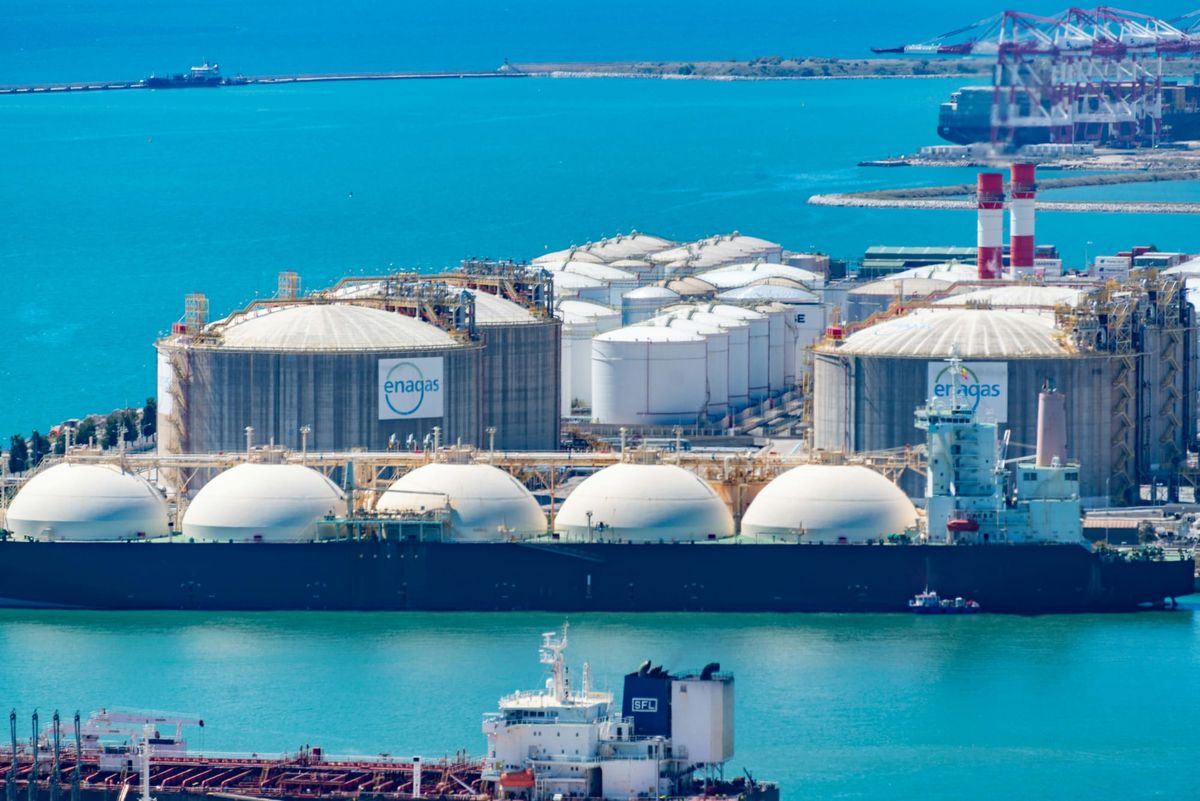
Nameplate U.S. LNG liquefaction capacity entering 2026 stands at approximately 14.0 Bcf/d across six operating facilities. Actual utilization runs at 90–95% nameplate during normal operations, meaning effective export capacity is roughly 12.5–13.5 Bcf/d on a consistent basis. For context: total U.S. dry gas production runs ~103–105 Bcf/d. LNG is now consuming roughly 12–13% of total supply — a profound structural change from the 2–3 Bcf/d export levels of 2017.
Facility by Facility
Sabine Pass LNG (Cheniere Energy, Cameron Parish, LA): The original U.S. export facility, with 6 operational trains at ~4.5 Bcf/d total capacity. Sabine Pass is fully utilized and operating at maximum efficiency. Train 6 expansion potential is in discussion but not yet sanctioned.
Corpus Christi LNG (Cheniere Energy, TX): Trains 1–3 operational at ~2.1 Bcf/d. Stage 3 expansion (trains 4–7) is under construction and expected to add ~3.0 Bcf/d by 2026–2028. Early Stage 3 commissioning is anticipated in 2026. This is the most significant near-term capacity addition in the sector.
Freeport LNG (Freeport LNG Development, TX): 3 trains at ~2.1 Bcf/d. Fully operational following the post-2022 fire and restart. A fourth train (~0.7 Bcf/d) received FERC approval; final investment decision pending commercial terms.
Cove Point LNG (Dominion Energy, MD): Single-train facility at ~0.75 Bcf/d. Sources predominantly Appalachian gas. Stable operations, no near-term expansion.
Calcasieu Pass LNG (Venture Global, LA): 18 mid-scale IPSMR trains at ~1.5 Bcf/d effective capacity. Venture Global commissioned this facility through 2022–2024. Has been the subject of commercial disputes with European buyers over commissioning cargoes vs. long-term contract deliveries.
Plaquemines LNG (Venture Global, Plaquemines Parish, LA): The newest facility, with first trains entering commercial operations in late 2025 and ramping through 2026. Target capacity: ~3.2 Bcf/d across 36 trains. Phase 1 feed gas demand (~1.5–2.0 Bcf/d) is materializing in early 2026. This is the most consequential new supply draw in the current market.
The Feed Gas Story
Feed gas demand to Gulf Coast LNG terminals averaged approximately 12.0 Bcf/d in Q4 2025 — up from ~10.5 Bcf/d in Q4 2024. With Plaquemines ramping and Corpus Christi Stage 3 early trains coming online, the EIA projects LNG feed gas to reach 14.0–14.5 Bcf/d by Q4 2026. That incremental 2.0+ Bcf/d of demand is the single largest supply pull in the U.S. natural gas market entering the year.
Upstream Winners: Haynesville
The Haynesville Shale (northwest Louisiana and east Texas) is geographically positioned to be the primary beneficiary. With major LNG terminals in Cameron Parish, Plaquemines Parish, and along the Gulf Coast, Haynesville gas faces minimal transport cost to reach liquefaction. Henry Hub to Gulf Coast basis has historically been minimal (~$0.05–0.15/MMBtu), keeping Haynesville economics tight to benchmark. Expand Energy, Comstock Resources, and Aethon are the primary operators. The rig count in Haynesville has been rising — expect 58–65 rigs by mid-2026.
Upstream Winners: Appalachia
Appalachian gas benefits less directly — it has to move via pipeline to Gulf Coast demand centers — but Mountain Valley Pipeline's completion in 2024 opened 2.0 Bcf/d of new southeast corridor capacity. This improved realized prices for EQT, Coterra, and Range Resources in southeast markets. The Southeast Gas Connector and further Transco Appalachian additions planned through 2026–2027 will continue to narrow the regional basis discount.
Henry Hub Outlook
The structural increase in LNG feed gas demand is the primary reason Henry Hub has recovered from below-$2 lows in 2024 to the $3.00–3.50 range entering 2026. EIA projects Henry Hub to average $3.20–3.60/MMBtu in 2026, with upside risk if LNG ramp-up proceeds faster than expected and winter weather cooperates. The floor has risen because export demand creates a new non-weather, non-power demand baseline that didn't exist five years ago. The natural gas market has structurally changed. Producers who survived the 2024 price trough are now positioned to benefit from what looks like a multi-year recovery.
Crude Intelligence Report is an independent upstream oil and gas intelligence publication. Content is for informational purposes only and does not constitute investment advice, financial advice, or a recommendation to buy or sell any security. Always conduct your own due diligence before making investment decisions. The author and publisher hold no positions in any companies mentioned in this article. © 2026 Crude Intelligence Report. All rights reserved.