
Haynesville: The LNG Feeder Basin
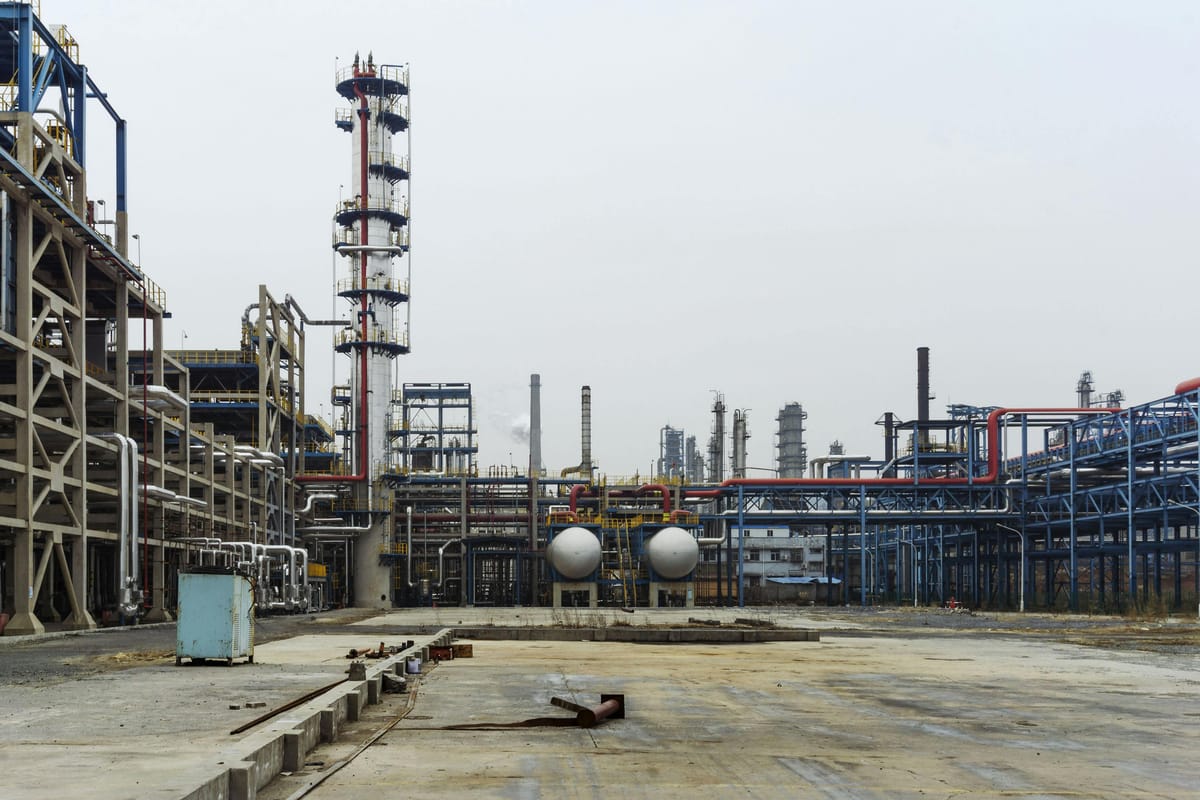
The Haynesville Shale doesn't get the same magazine covers as the Permian. No flashy oil production records, no billion-dollar M&A headlines every quarter. But if you care about U.S. LNG export capacity — and you should — the Haynesville deserves your full attention. It is, increasingly, the dedicated feeder basin for the Gulf Coast LNG complex.
What the Haynesville Is
The Haynesville is a deep, dry natural gas play straddling the Texas-Louisiana border — primarily Caddo, De Soto, and Red River parishes in Louisiana, and Harrison and Panola counties in Texas (the so-called "Bossier" extension). It produces almost exclusively dry gas — no oil, minimal NGLs — from a high-pressure, high-temperature reservoir at depths of 10,000–13,000 feet.
Current production is approximately 15–16 Bcf/d, making it the third-largest gas-producing basin in the U.S. behind Appalachia (Marcellus/Utica) and the Permian's associated gas. But unlike Appalachian gas, which faces persistent takeaway constraints and basis differentials, Haynesville sits 50–150 miles from a string of LNG export terminals on the Louisiana and Texas Gulf Coast. Proximity to demand is its defining commercial advantage.
The LNG Demand Pull
U.S. LNG export capacity has grown from essentially zero in 2016 (when Sabine Pass Train 1 came online) to roughly 14 Bcf/d of nameplate capacity as of early 2025. Operational trains include Sabine Pass T1–T6, Corpus Christi T1–T3, Cameron LNG, Freeport LNG, Cove Point, and Elba Island. That's before counting capacity additions currently under construction.
Sabine Pass expansion (T7, Venture Global's CP2, and others) could add another 5–8 Bcf/d of capacity by 2028–2030. This demand pull is not subtle: every new LNG train is essentially a multi-decade gas demand contract, and the question of which basin feeds it is largely settled by pipe economics. The Haynesville wins on proximity and pipeline connectivity.
Venture Global's Calcasieu Pass — which achieved commercial operations in 2024 — sources gas primarily via Haynesville-connected pipes. The project's Phase 2 (CP2, 20 MTPA) would add another 2.7 Bcf/d of demand. Sabine Pass T5/T6 and the planned Golden Pass LNG (ExxonMobil/QatarEnergy) similarly draw on Southeast Texas/Louisiana gas supply.
Who's Drilling the Haynesville
The basin is more consolidated than most. Comstock Resources — controlled by Dallas Cowboys owner Jerry Jones — is the dominant pure-play Haynesville operator, with roughly 310,000 net acres and production of around 1.5 Bcf/d. Comstock has been aggressive on lateral length, running 15,000-foot laterals to capture more gas per well and reduce per-unit costs.
Chesapeake Energy (now merged with SWN to form Expand Energy in late 2024) brought significant Haynesville acreage into its portfolio via its 2022 Chief Oil & Gas acquisition. The combined Expand Energy entity now controls one of the largest Haynesville positions alongside its dominant Appalachian footprint — a strategic hedge between the two largest dry gas plays in the country.
Southwestern Energy's Haynesville assets (now under Expand Energy's umbrella) had been growing production year-over-year before the merger. The strategic logic: a company with both Appalachian and Haynesville exposure can route gas to whichever market offers better realizations — Appalachian gas to Northeast demand centers; Haynesville to Gulf LNG.
Other notable operators include Aethon Energy, Rockcliff Energy (now part of TG Natural Resources), and BPX Energy (BP's U.S. upstream arm).
Well Economics: Deep, Expensive, But Capable
Haynesville wells are among the most expensive dry gas wells drilled in the U.S. A standard 10,000-foot lateral runs $12–$16 million, reflecting high-pressure drilling requirements, intensive completions (60+ stages, heavy proppant), and deep-well mechanical complexity. That compares unfavorably to Marcellus wells in core Appalachian positions at $6–$9 million for similar lateral lengths.
But Haynesville wells also deliver exceptional IP rates — 20–30 MMcf/d for top wells in core Caddo/De Soto acreage — and high cumulative recoveries. Comstock has reported 24-month cumulative recoveries of 8–12 Bcf on its best wells. At a Henry Hub price of $3.00/MMBtu, that's $24–$36 million of gross revenue per well — sufficient to justify the cost structure in core positions.
The basin's half-cycle breakeven is roughly $2.50–$3.00/MMBtu HH in core positions, rising to $3.50+ in fringe areas or for operators with higher cost structures. Given that HH averaged around $2.20/MMBtu in 2023–2024, marginal Haynesville economics were challenging — a key reason rig count fell from 65+ in 2022 to 35–40 by late 2024.
The Infrastructure Edge
Haynesville's physical connectivity to LNG is one of the most under-appreciated competitive advantages in U.S. natural gas. The basin has direct pipeline connections to all major Louisiana LNG terminals via Boardwalk Pipeline, Texas Gas, Southern Union, and Gulf South systems. The distance from core De Soto Parish production to Sabine Pass is roughly 130 miles — versus 1,800+ miles for Marcellus gas trying to reach the same terminal.
That basis advantage translates directly to operator economics. Haynesville producers frequently realize premiums to published Henry Hub, particularly during peak LNG export demand periods when Gulf Coast basis strengthens relative to northern hubs.
The Big Question: $3 Gas and Capital Discipline
The near-term challenge for the Haynesville is simple: gas prices need to recover to $3.25–$3.50/MMBtu to incentivize meaningful rig count growth. The EIA forecasts average HH prices of $3.10/MMBtu for 2025, rising toward $3.50 as new LNG demand comes online in 2026–2027. That's the timeline the basin is waiting for.
When the next wave of LNG trains comes online, the Haynesville will be the basin that feeds them. The question is whether operators can stay liquid long enough to drill into that demand.