
H1 2025 Scorecard: What Actually Happened
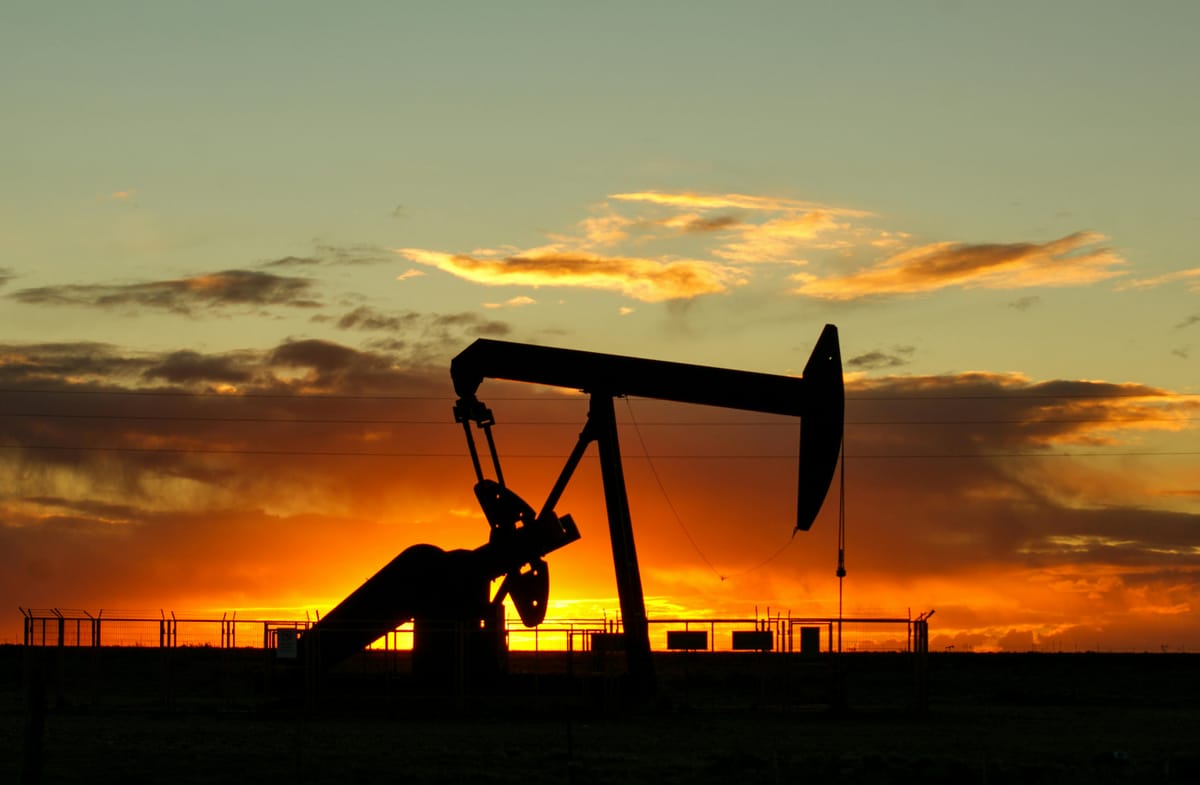
Six months into 2025, the upstream oil and gas industry delivered a performance that surprised almost nobody who was paying attention — and confused everyone who wasn't. WTI averaged roughly $69/bbl through the first half, a number that looks stable in isolation but masked considerable volatility: a Q1 selloff below $65 on OPEC+ oversupply fears, followed by a partial recovery on tighter-than-expected U.S. inventory draws and modest demand resilience in Asia.
Here's how the major storylines actually scored out.
Production: The U.S. Still Growing, Just Slower
U.S. crude production averaged approximately 13.4 million barrels per day in H1 2025, according to EIA weekly estimates — up roughly 200,000 bbl/d from H2 2024. That's growth, but it's the slowest pace of growth since 2020. The Permian remained the engine, adding around 150,000 bbl/d year-over-year, while the Bakken and Eagle Ford were essentially flat. Appalachia gas production held steady above 36 Bcf/d despite pricing that made some operators question their 2025 activity plans.
The rig count told the story: the U.S. land rig count averaged around 580 during H1, roughly 30 rigs below the year-ago level. Operators were doing more with less — lateral lengths continued to push longer, well productivity per rig improved, and completion crews worked faster. The efficiency gains were real, but they weren't infinite.
The Majors: XOM Runs the Show
ExxonMobil's integration of Pioneer Natural Resources — completed in mid-2024 — continued to show results. Exxon's Permian output exceeded 1.2 million boe/d in Q1 2025, with management guiding toward 1.3 million by year-end. The merged entity commanded a structural cost advantage that smaller operators couldn't match: Exxon's Permian breakeven was being quoted in the low-$40s/bbl range, insulating margins even in the softer price environment.
Chevron's performance was more complicated. The Hess acquisition integration brought Guyana exposure but also integration costs and legal uncertainty around CNOOC's preemption rights. Chevron's U.S. Permian production grew modestly, but the company was clearly managing to a returns target rather than a volume target.
The Independents: Discipline Mostly Held
EOG Resources, Diamondback Energy, Coterra Energy, and Devon Energy all entered 2025 with capex budgets set conservatively — most had stress-tested at $55–60 WTI. At realized prices near $68–70, that discipline translated into robust free cash flow and continued return of capital to shareholders. EOG maintained its 2025 capex guidance unchanged through Q1 results, a clear signal that management wasn't chasing production growth at the expense of returns.
Diamondback was a notable standout. The company's integration of Endeavor Energy Resources — the largest private E&P acquisition in history when it closed in 2024 — was proceeding ahead of schedule. Synergies were tracking above initial guidance, and Diamondback's Midland Basin position was arguably the most enviable in the independent E&P space.
Devon Energy, by contrast, had a rougher H1. The company's Eagle Ford position underperformed expectations, and guidance was trimmed slightly in Q1 results. Management cited completion timing and some downtime from severe weather in South Texas. The stock lagged the peer group through June.
Natural Gas: Still Looking for a Floor
Henry Hub averaged under $2.50/MMBtu through much of H1 2025, keeping dry gas-focused operators in survival mode. Appalachian producers — particularly Coterra's Marcellus position and EQT — were managing activity levels carefully, with most directing free cash toward debt reduction and buybacks rather than growth. The consensus view heading into H2: LNG export demand growth would tighten the market by late 2025, but the near-term supply overhang persisted.
Haynesville operators had a particularly tough H1. Comstock Resources, already carrying significant debt, was managing cash flow tightly with WTI-equivalent gas prices well below the levels needed for robust economics at current service costs.
The OPEC+ Wildcard
The June OPEC+ meeting delivered another production increase — the alliance added roughly 400,000 bbl/d in the June decision, continuing a pattern of gradual unwinding of cuts that had kept markets on edge since early 2025. Saudi Arabia appeared to be prioritizing market share over price support, a shift that was being discussed as a potential regime change in global oil supply management. Whether that interpretation was correct, or whether this was tactical pressure on higher-cost producers, remained the central debate entering H2.
Scorecard Summary
Heading into H2 2025, U.S. upstream is in a position of disciplined resilience. Cash flows are healthy at current prices, balance sheets are in good shape across most of the major independents, and M&A activity — while quieter than 2023–2024's record pace — continues to consolidate the landscape toward larger, lower-cost operators. The risks are clear: a sustained move below $60 WTI would pressure activity, and gas prices remaining below $2.50 through summer creates budget stress for pure-play gas producers. But for diversified operators with Permian oil exposure, H1 2025 was exactly what management teams ordered.