
Geopolitical Risk Premium: How Much Should Oil Price In?
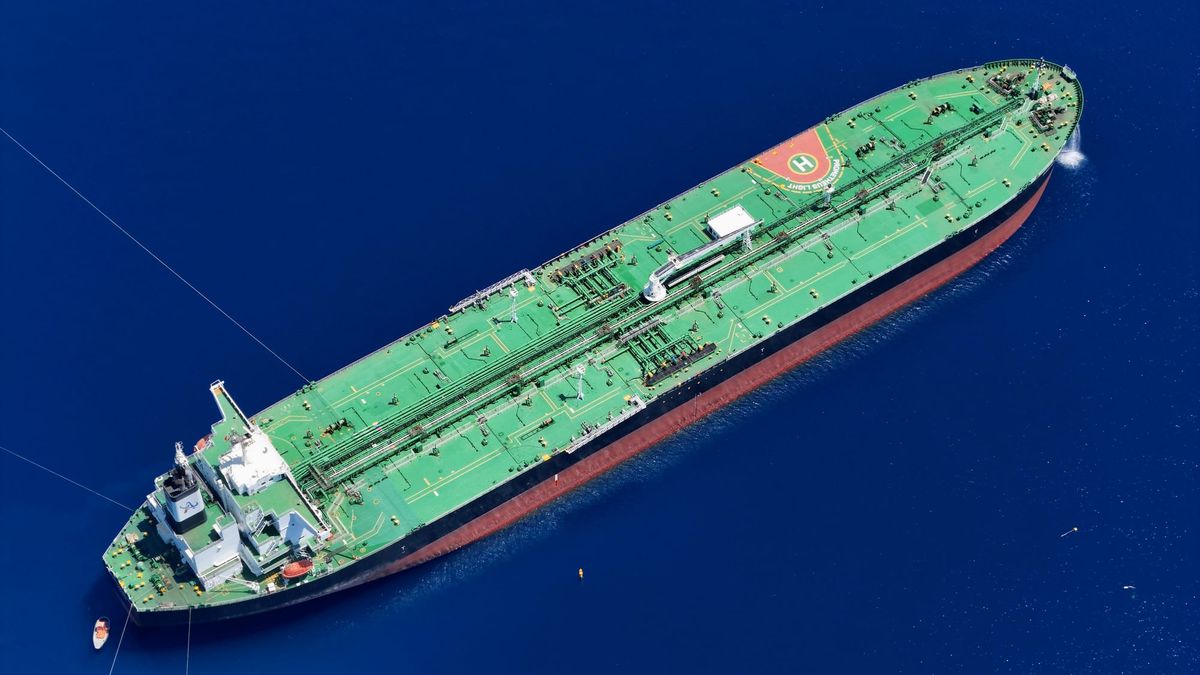
Every time a tanker is attacked in the Red Sea, a pipeline is sabotaged in Iraq, or tensions escalate in the Persian Gulf, oil markets face the same question: how much is enough? How large a risk premium should be embedded in crude prices to account for geopolitical disruption risk — and how quickly should that premium evaporate when the immediate threat subsides?
The debate over geopolitical risk pricing is as old as the modern oil market, but the 2022–2025 period has provided an unusually rich set of case studies. From the Russian invasion of Ukraine and the subsequent sanctions war to Houthi attacks on Red Sea shipping and ongoing instability in Libya and Nigeria, the geopolitical risk environment for crude has been elevated and multidimensional.
The Risk Premium Framework
In theory, the geopolitical risk premium in oil is the difference between the current price and the price that would exist in a fully stable, frictionless supply environment. In practice, this is impossible to measure precisely — you can't observe the counterfactual. But market participants have developed heuristics.
Standard commodity trading house analysis typically segments geopolitical risk into two buckets: "priced in" risk, which reflects threats that markets have acknowledged and partially discounted into current prices; and "tail risk," which encompasses low-probability, high-impact scenarios that may not be fully reflected in spot prices but may show up in options volatility (the implied volatility term structure in crude options often rises sharply around geopolitical flashpoints).
The Russia-Ukraine war provided a textbook example. When Russia invaded Ukraine in February 2022, Brent crude surged from the low $90s to a peak near $130/bbl in March. Markets were pricing in the possibility of significant Russian supply disruption — either from sanctions, infrastructure damage, or voluntary Western boycotts. As it became clear that most Russian crude would be rerouted to India, China, and Turkey rather than taken off the market entirely, the risk premium faded. By late 2022, prices had retraced significantly.
The Red Sea Disruption
Houthi attacks on commercial shipping in the Red Sea and Bab-el-Mandeb strait, beginning in late 2023 and intensifying through 2024, created a different type of geopolitical risk: not supply disruption per se, but route disruption and cost inflation in global petroleum logistics. Tankers began rerouting around the Cape of Good Hope, adding 10–14 days of transit time and significant fuel and cost overhead to voyages from the Middle East and Asia to Europe.
Crude prices responded, but modestly — WTI and Brent moved higher by $3–5/bbl in the initial phase of the crisis, not the $20–30 surges of major supply disruptions. Markets judged correctly that tanker rerouting, while costly, did not reduce actual supply reaching end markets. Inventories remained adequate. The risk premium was real but calibrated to the actual supply impact — limited.
Iraq: Chronic Low-Level Disruption
Iraq produces roughly 4.2–4.5 million barrels per day, making it the third-largest OPEC producer. But Iraq's production is perpetually at risk from pipeline sabotage, political dysfunction between Baghdad and the Kurdistan Regional Government, and infrastructure underinvestment. The Iraq-Turkey pipeline — which carries Kurdish and northern Iraqi crude to the Turkish port of Ceyhan — was shut for over a year beginning in March 2023 following an arbitration ruling, removing approximately 450,000 bbl/d from global markets.
Iraqi disruptions rarely move global prices dramatically because they are priced in as baseline risk. Markets have learned to discount chronic Iraqi underperformance. This creates an interesting paradox: if Iraq ever achieved its full production potential through political stability and infrastructure investment, the realized supply increase could be more surprising to markets than the disruptions themselves.
Iran: The Wildcard
Iranian crude production — operating under Western sanctions with varying enforcement — represents perhaps the largest single source of geopolitical pricing uncertainty in the current market. Official sanctions limit Iran's ability to sell crude to Western markets, but enforcement has been inconsistent, and Iranian exports to China have continued at elevated levels throughout 2023–2025.
Estimates of Iranian production vary, but credible numbers suggest Iran has been producing 3.0–3.5 million bbl/d while selling roughly 1.5–1.8 million bbl/d internationally — mostly to Chinese teapot refineries. A sudden, aggressive enforcement of Iranian sanctions could remove 1+ million bbl/d from the market, a supply shock that OPEC+ would struggle to offset immediately. Conversely, a sanctions relief deal (as nearly materialized in 2022) could add supply and pressure prices lower.
Calibrating the Premium for 2026
For upstream operators and traders planning for 2026, the relevant question is what geopolitical risk scenarios should be probability-weighted into their price assumptions. CIR's view: the baseline case should embed a modest $3–5/bbl risk premium above fundamental supply-demand equilibrium, reflecting the now-chronic elevated risk environment. Major escalation scenarios — a broader Middle East conflict, aggressive Iranian sanctions enforcement, significant Russian infrastructure damage — could add another $10–20/bbl on a temporary basis.
The most important discipline is not over-pricing geopolitical risk in long-term capital allocation decisions. The history of oil markets is littered with companies that locked in high-cost projects based on conflict-elevated prices, only to see prices normalize when the crisis resolved. Geopolitical risk premiums are inherently temporary; well economics need to work at through-the-cycle prices.
The risk premium is real. Just don't bet the company on it.
Crude Intelligence Report is an independent upstream oil and gas intelligence publication. Content is for informational purposes only and does not constitute investment advice, financial advice, or a recommendation to buy or sell any security. Always conduct your own due diligence before making investment decisions. The author and publisher hold no positions in any companies mentioned in this article. © 2026 Crude Intelligence Report. All rights reserved.