
February Rig Count: Q1 2026 Taking Shape
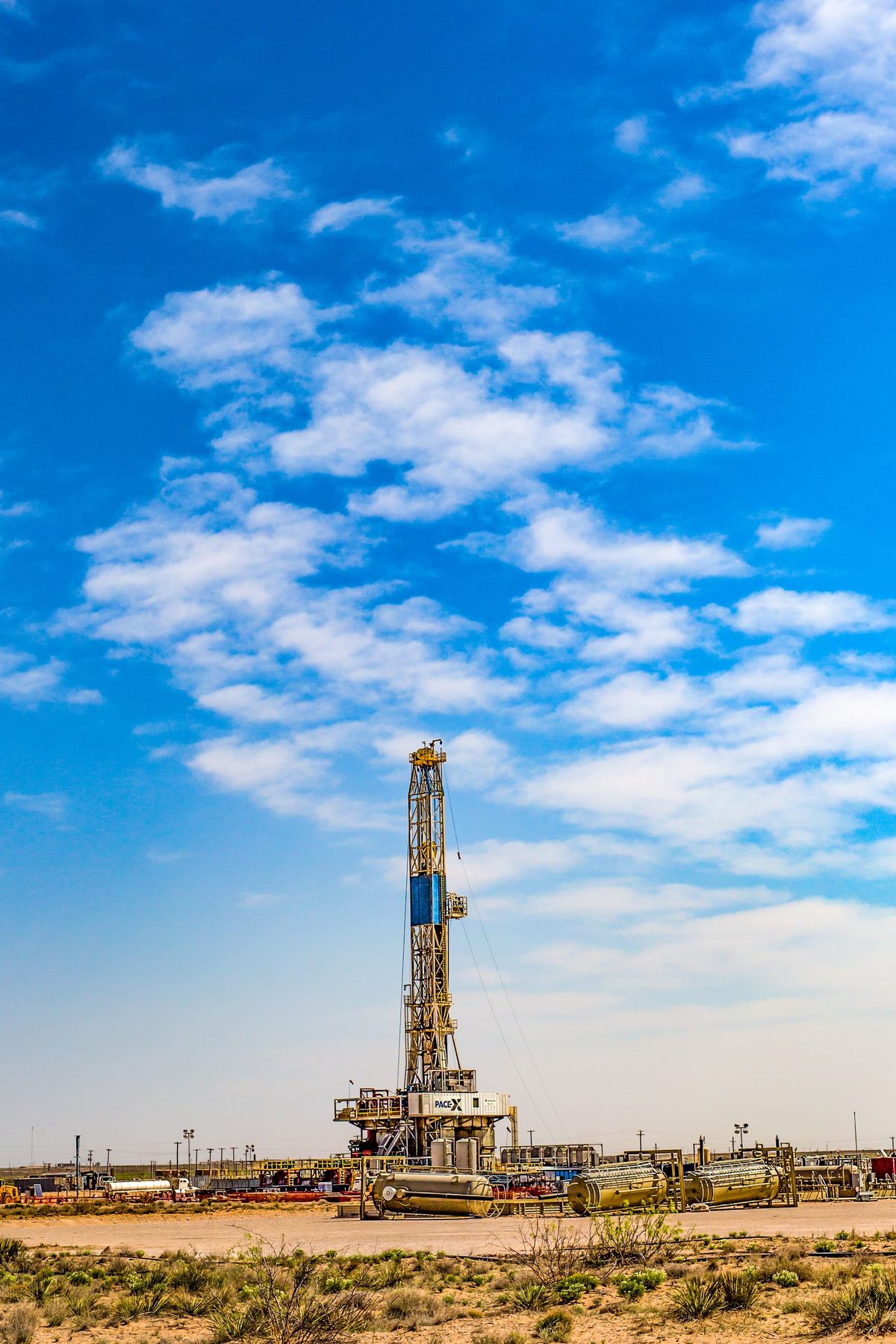
The Baker Hughes rig count is the most widely cited real-time indicator of upstream activity in the United States, published weekly every Friday. As February 2026 closes, the count provides the clearest signal yet of how operators are executing on the 2026 capital programs they outlined during Q4 earnings.
February 2026 Count: The Numbers
According to Baker Hughes weekly rig count data, the U.S. total active rig count as of mid-to-late February 2026 is tracking in the range of 580–600 rigs — an oil rig count of approximately 470–490 and a gas rig count of approximately 100–110, with the remainder on miscellaneous/directional programs.
The Permian Basin accounts for approximately 300–310 of those active rigs, maintaining its dominant position as the most actively drilled basin in the country. The Eagle Ford is holding in the 55–65 rig range. The Bakken is running approximately 35–40 rigs. The DJ Basin (Wattenberg/Niobrara) is running approximately 15–20 rigs. The Haynesville, benefiting from improved gas prices, has seen activity tick up to approximately 45–55 rigs.
Historical Context
According to Baker Hughes historical data, the U.S. rig count context for February is revealing:
February 2022 (post-COVID recovery peak period): U.S. total rigs were approximately 660, heading toward the 780+ peak reached in late 2022 as operators rushed to respond to the post-invasion oil price spike.
February 2024: U.S. total rigs had fallen to approximately 620–630, reflecting the combination of higher-rate environment, lower oil prices from 2023 highs, and operator commitment to capital discipline.
February 2025: Rigs further rationalized to approximately 580–590, with operators executing on flat-to-down capex programs.
February 2026: Essentially stable versus February 2025 — the flat trend is holding. Gas rigs have ticked up slightly on Henry Hub recovery; oil rigs are stable.
Basin-by-Basin Reading
The Permian's stability is the most important data point. With production at or near record levels and the largest operator cohort in U.S. history now running the basin (post-mega-merger), the Permian rig count's stability signals that operators are maintaining output with existing efficiency rather than adding incremental activity. This is consistent with Q4 2025 earnings guidance from XOM, CVX, FANG, and the major independent Permian operators.
The Haynesville uptick is consistent with the natural gas recovery narrative. Operators with low-cost Haynesville inventory are responding to improved Henry Hub economics by adding rigs at the margin. Comstock Resources and other Haynesville specialists were signaling incremental activity in their Q4 calls; the February rig count is confirming those signals.
The Eagle Ford stability — consistent with CIR's assessment of the basin as a harvest play — reflects operators maintaining production with steady-state activity rather than growing. ConocoPhillips' inherited Marathon acreage is running efficiently; EOG is maintaining its condensate window program.
The Bakken's rig count reflects Chord Energy's operational discipline. Approximately 35–40 rigs is sufficient to maintain production near current levels for a basin with the Bakken's inventory and lateral length capabilities. This is mature basin management in action.
Production Implications: The 6-Month Lag
The critical analytical point about the rig count is the production lag. According to EIA Drilling Productivity Report methodology, there is approximately a 3–6 month lag between rig activity changes and measurable production impacts, depending on the basin and completion cycle times.
February 2026's flat rig count implies that Q3–Q4 2026 production will also be roughly flat to modest growth. The Permian's efficiency gains — longer laterals, better completion designs, improved well targeting — can still deliver production growth with a stable rig count, but the growth rate will be measured in percentage points rather than the double-digit growth years of 2017–2019.
According to EIA's Short-Term Energy Outlook, U.S. crude production is forecast to remain near record levels through 2026, with modest growth. The February rig count is consistent with that trajectory: not accelerating, not declining.
CIR Analysis
CIR Analysis: February 2026's rig count is a Rorschach test. If you expected "drill baby drill" to translate into materially higher activity, the flat count looks disappointing. If you understand that capital discipline is structural and that efficiency gains allow production maintenance with fewer rigs, the flat count looks exactly right. The most important signal in the February data is the Haynesville uptick — it confirms that the gas price recovery is prompting real operational responses from gas-focused operators, not just financial statement improvements. That's the inflection point worth watching. If the Haynesville gas count continues to rise through Q2, it signals operators believe the gas recovery is durable enough to justify new wells — a meaningful shift in sentiment. The oil rig count's stability, by contrast, is the new normal. U.S. crude production can sustain near-record levels on 470–490 oil rigs because the wells being drilled today are dramatically more productive than those drilled a decade ago. That efficiency story is what makes U.S. shale fundamentally different from any prior resource development cycle.
Crude Intelligence Report is an independent upstream oil and gas intelligence publication. The content in this article is for informational purposes only and does not constitute investment advice, financial advice, or a recommendation to buy or sell any security. Always conduct your own due diligence before making investment decisions. CIR and its contributors may hold positions in companies mentioned; any such positions will be disclosed when known. © 2026 Crude Intelligence Report. All rights reserved.