
Fall 2025 Rig Count Analysis: Reading the Tea Leaves
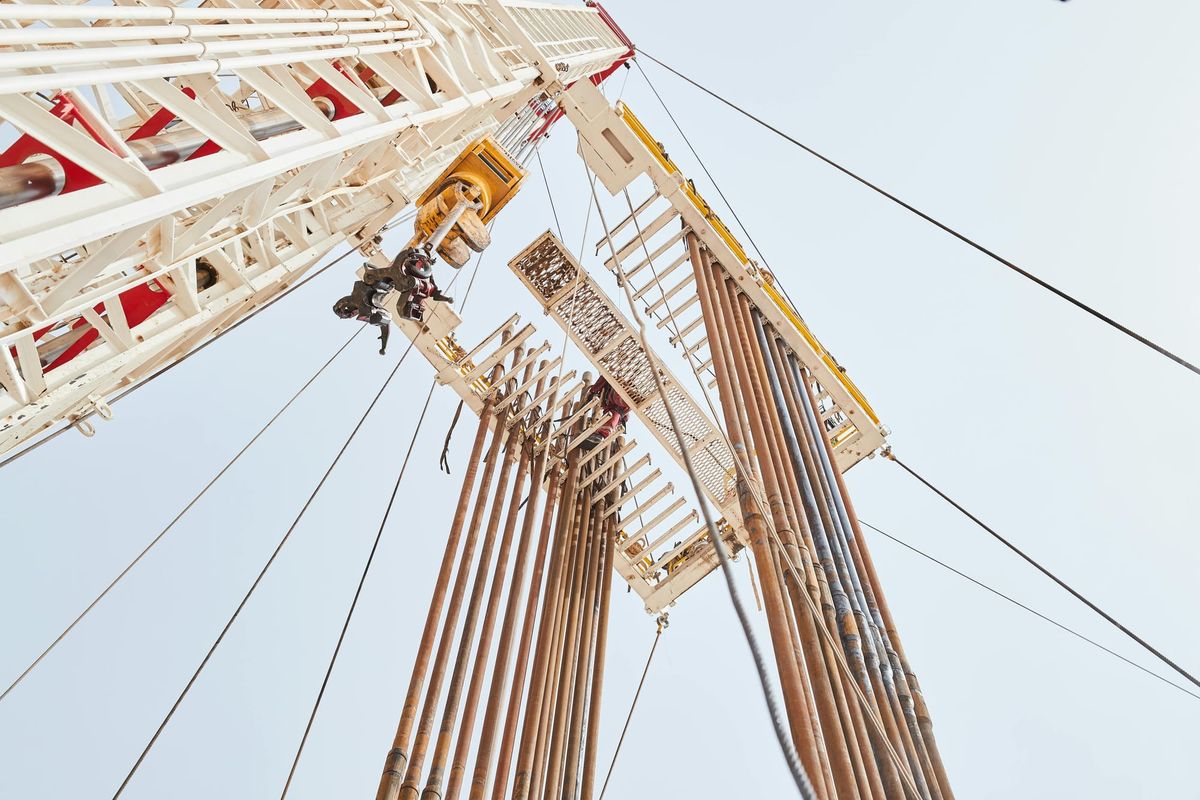
Every Friday afternoon, Baker Hughes releases its weekly U.S. rig count — one of the most-watched data series in the oil and gas industry. The number of active drilling rigs is an imperfect but real-time proxy for operator confidence, capital deployment pace, and the near-term production trajectory of U.S. crude and natural gas output.
Entering the fall of 2025, the rig count picture tells a story of stability rather than momentum. Total U.S. rigs active are running in the 580–600 range — flat to slightly down from mid-2025 peaks — and the composition of activity is shifting in ways that reflect the multi-year low in natural gas prices and the emergence of strategic drilling discipline among public E&Ps.
Oil-Directed vs. Gas-Directed Activity
Of the approximately 590 active rigs in late September 2025, roughly 480–490 are oil-directed and 100–110 are gas-directed. This ratio — approximately 80/20 oil-to-gas — reflects the commodity price environment: WTI in the low-to-mid $70s is constructive for oil-directed drilling, while natural gas prices, though improved from 2024 lows, have not yet recovered enough to pull gas-directed rigs back to their 2022–2023 activity levels.
Compare this to the post-COVID peak in late 2022, when total U.S. rigs reached approximately 780 and gas-directed rigs approached 160. The 35% decline in gas-directed activity since then reflects the brutal shakeout that natural gas producers have endured. Operators who maintained discipline — hedging, cutting costs, avoiding overextension — have weathered the trough. Those who overdrilled into low prices have struggled with balance sheet consequences.
The Permian Dominates
The Permian Basin remains the most active play in North America by a wide margin. The combined Midland and Delaware Basin rig count runs in the 300–320 range — more than half the total U.S. oil-directed count. This concentration reflects both the geological superiority of the Permian (best rock, highest returns per dollar deployed) and the infrastructure advantage (takeaway capacity, water disposal, oilfield services availability).
Within the Permian, the Delaware Basin in southeastern New Mexico and west Texas has seen relative growth versus the Midland Basin. Delaware wells are longer, more expensive, and in some cases higher-deliverability; the shift reflects operators high-grading their portfolios to the best locations as cost discipline becomes paramount. Companies like Coterra Energy, Devon Energy, and OXY (Occidental Petroleum) have significant Delaware positions and have been active drillers there.
The Eagle Ford in south Texas runs a distant second in activity, with approximately 60–70 rigs active. The Eagle Ford's rig count has been essentially flat for two years — operators are running steady-state programs, maintaining production rather than growing it. ConocoPhillips (integrating Marathon Oil's Eagle Ford assets) and EOG Resources are the dominant operators and are running disciplined, returns-focused programs.
The Haynesville: Watching for Recovery
Natural gas basin activity is the variable to watch for early signals of a demand recovery. The Haynesville rig count — which peaked near 70 in 2022–2023 — has recovered from its trough in the low 40s to roughly 50–55 active rigs in September 2025. This recovery is slow and cautious, reflecting operators' desire to see sustained gas price improvement before committing to accelerated drilling programs.
The key catalyst for a more meaningful Haynesville rig ramp would be Henry Hub prices consistently holding above $3.50. At that level, a broad swath of the basin's inventory generates acceptable returns. The LNG export demand pull is the mechanism to get there — and as Plaquemines LNG and other projects come online in 2026, the gas balance should tighten meaningfully.
The Marcellus/Utica rig count in Appalachia is similarly subdued — running in the 25–35 range, down sharply from the 40–50 levels of more active periods. Takeaway constraints and depressed Appalachian basis differentials have limited operator enthusiasm. EQT and Range Resources are running efficient, minimal programs to maintain their leasehold and production base without overinvesting.
Efficiency: The Rig Count's Misleading Denominator
The most important caveat in any rig count analysis is that each rig today does dramatically more work than a rig of a decade ago. Average lateral lengths in the Permian have grown from roughly 7,000 feet in 2018 to 11,000–13,000 feet in 2025. Drilling days per well have declined. Completion intensity (proppant per foot, fluid per stage) has increased. The result is that 590 rigs in 2025 generate more production than 600 rigs did in 2019.
This efficiency improvement means the rig count can be a misleading leading indicator of production without adjustment. The EIA's "drilling productivity report" attempts to capture these dynamics by estimating new-well production per rig. By that measure, U.S. production per active rig is at all-time highs — which is simultaneously good news (more output per dollar invested) and challenging news (for service companies seeing lower activity levels but being asked to do more work per unit).
What the Tea Leaves Say
Reading the fall 2025 rig count data, CIR's interpretation is: oil-directed activity is stable and consistent with flat-to-modest U.S. crude production growth in 2026. Gas-directed activity is recovering slowly, consistent with gradual (not explosive) gas production growth as LNG demand picks up. The rig count is not signaling either boom conditions or bust — it's signaling steady-state discipline, which is exactly what the E&P industry has promised investors since 2021.
The more interesting read will come in Q4, after operators complete their 2026 budget cycles. The January rig count is typically the first clean read on how the industry has set its activity level for the coming year.
Crude Intelligence Report is an independent upstream oil and gas intelligence publication. Content is for informational purposes only and does not constitute investment advice, financial advice, or a recommendation to buy or sell any security. Always conduct your own due diligence before making investment decisions. The author and publisher hold no positions in any companies mentioned in this article. © 2026 Crude Intelligence Report. All rights reserved.