
Drilling Technology: What's Actually Moving the Needle
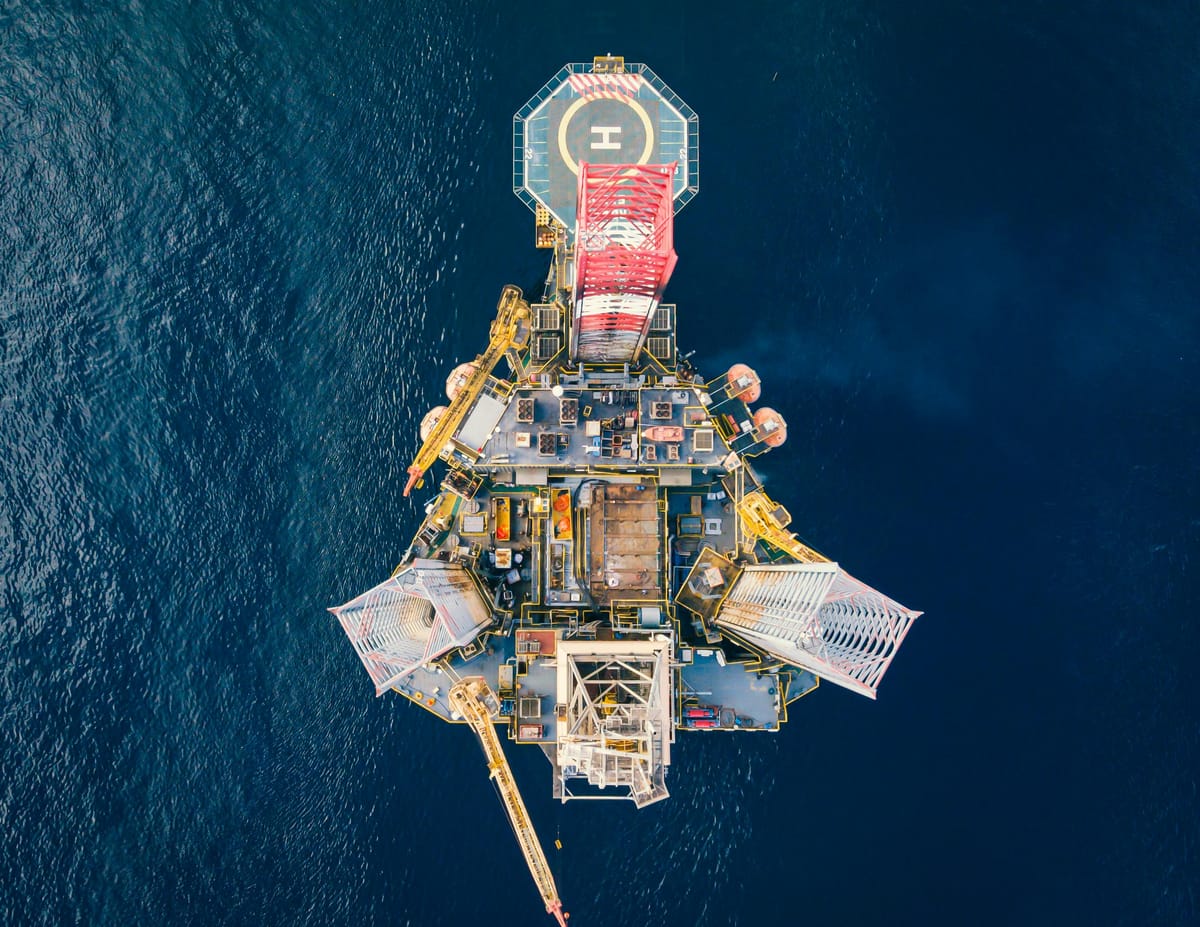
The upstream oil and gas industry is experiencing a genuine technological transformation — not the AI-hype version that fills press releases, but the kind measured in dollars per foot drilled, barrels produced per well, and days spud-to-TD. The numbers from 2023–2025 make the efficiency gains impossible to dismiss.
Lateral lengths in the Permian Basin averaged approximately 12,000–13,000 feet in 2024, compared to 9,000–10,000 feet just four years prior. Well costs per foot have largely held flat or declined modestly even as those laterals extended — meaning operators are getting more reservoir contact for essentially the same or lower total well cost. That's the drill-bit-level story. But several other technologies are driving the efficiency revolution in ways that deserve closer examination.
Automated Drilling: Real Progress, Finally
Automated drilling systems — where the rig controls weight on bit, rotary speed, and fluid management algorithmically rather than through driller discretion — have moved from pilot programs to widespread deployment across tier-1 operators. Precision Drilling, Patterson-UTI, and Nabors Industries have all deployed automated drilling packages on significant portions of their premium rig fleets.
The performance data is compelling. Operators using automated drilling systems consistently report 10–15% reductions in drilling time on comparable wells, with significant reductions in unplanned events (stuck pipe, wellbore instability, bit failures). EOG and Diamondback have both been transparent about deploying these systems across their Permian operations and incorporating performance benchmarks into service contract structures — paying for performance, not just time.
The subtler benefit is consistency: automated systems drill a more consistent wellbore, which improves completion performance. Better wellbore geometry means better hydraulic fracturing results, which means better initial production and longer flat-time on the production curve.
Extended Reach Laterals and the 3-Mile Well
The 15,000-foot lateral — roughly 3 miles of horizontal wellbore — is moving from experimental to operational. Several Permian operators drilled test laterals at 15,000+ feet in 2024; by mid-2025, multiple companies are running these as part of standard programs in target intervals with sufficient continuous acreage.
The economics are powerful: a 15,000-foot lateral typically costs roughly 20–25% more than a 10,000-foot lateral but accesses 50% more reservoir. In plays with consistent geology and sufficient acreage footprint, the economics per foot of lateral consistently outperform standard-length wells. The catches: not all acreage configurations allow extended laterals (lease line constraints matter), and the completion engineering becomes more complex at greater lengths — ensuring uniform stimulation across the full lateral is harder.
ConocoPhillips and Diamondback have been particularly aggressive about extending lateral lengths as a lever to lower breakeven costs without requiring service cost concessions.
Simultaneous Operations (SimOps)
Pad drilling — multiple wells drilled from the same surface location — has been standard practice for years. The newer evolution is simultaneous operations: drilling one well while completing another (fracking) on the same pad, often while producing from already-completed wells. This was once considered too operationally risky; it is now standard practice for operators with sufficient scale.
The benefit is pure efficiency: rig utilization improves, completion crews have consistent work, and the surface infrastructure (roads, tanks, piping) is shared across more wells simultaneously. Time on location compresses, reducing the time between spud and first production. EOG's operational efficiency in the Eagle Ford and Permian has been a benchmark study in SimOps; their spud-to-production timing consistently outperforms peers.
Completion Innovation: More Sand, Better Placement
Hydraulic fracturing completions have continued to evolve. Proppant volumes per foot have increased significantly over the past five years — it's now common to see 3,000–3,500 pounds of sand per foot in Permian Wolfcamp completions, up from 1,500–2,000 pounds in 2018–2019. Fluid efficiency has improved as well, with more operators using slickwater designs at higher pump rates to create more complex fracture networks.
The more interesting development is diversion technology: using temporary plugging agents to force fractures to create more uniformly distributed along the lateral rather than concentrating at a few high-permeability clusters. Companies including Halliburton and SLB have commercialized diversion systems that demonstrably improve production uniformity and initial rates. This is arguably the most economically significant completion innovation of the past 3–4 years, and it's still being optimized.
Data and Subsurface Intelligence
The least glamorous but perhaps most impactful technology category is data analytics applied to subsurface decision-making. Every major E&P now has a data science function that applies machine learning to completion design optimization, well placement, and production forecasting. The competitive edge isn't in having the technology — it's in the proprietary dataset quality and the organizational ability to act on insights quickly.
ExxonMobil's integration of Pioneer's technical capabilities highlighted this: Pioneer had one of the industry's most sophisticated subsurface data platforms for the Permian Basin, and Exxon acquired not just the acreage but the institutional knowledge and data infrastructure. That competitive advantage is hard to replicate.
The Bottom Line
Technology is delivering real results in the upstream sector — not through a single breakthrough, but through the compounding effect of multiple efficiency improvements applied across increasingly optimized operations. The practical consequence is a lower breakeven price environment: operations that needed $55 WTI in 2018 may need only $45–50 WTI in 2025 for the same risk-adjusted returns. That durability, more than any individual technology, is the story of the shale industry in mid-decade.