
Diamondback Energy: Building a Permian Empire
Diamondback's acquisition of Endeavor transformed it from a disciplined independent into the Permian's defining pure-play operator. Here's how it stacks up.
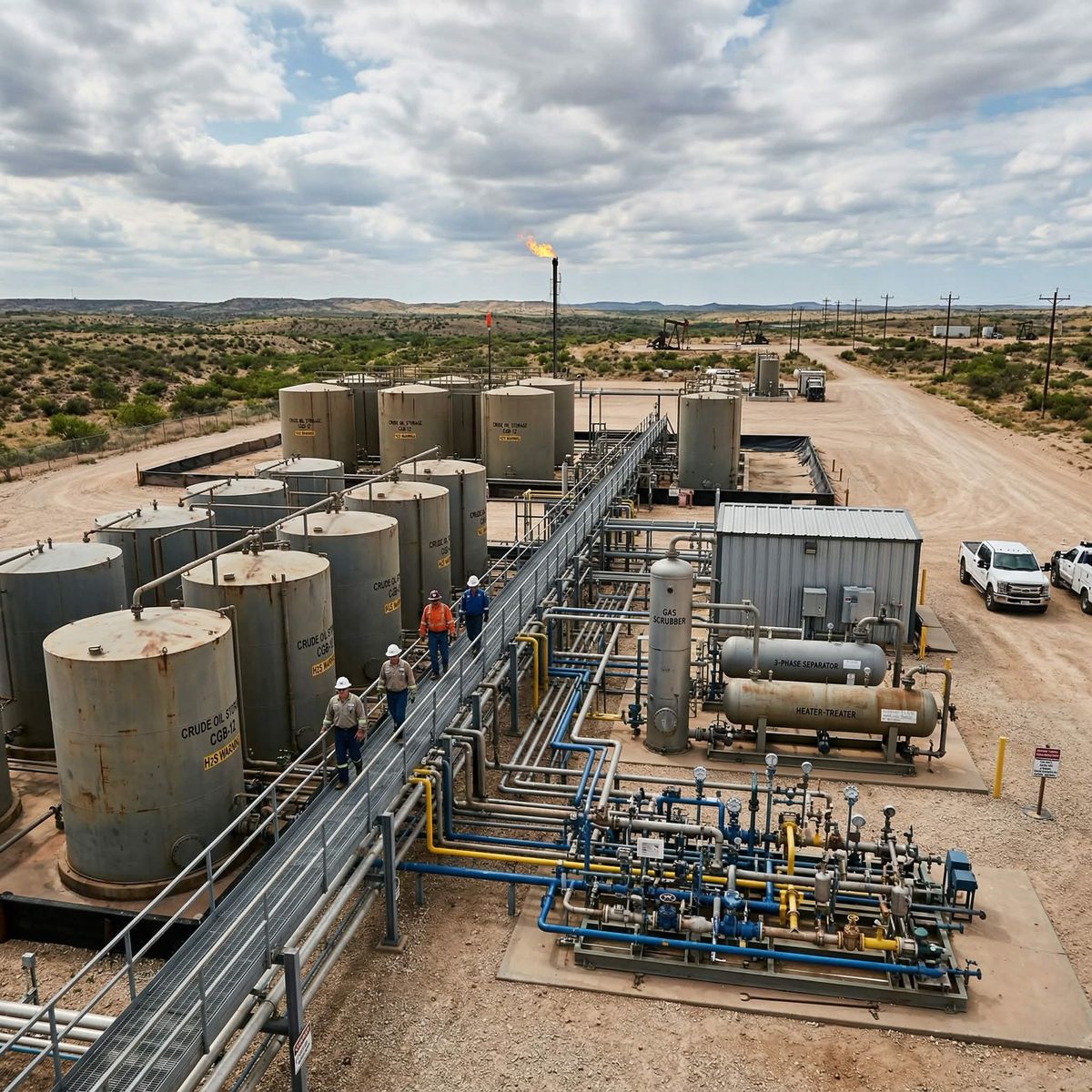
In the history of Permian Basin consolidation, a handful of transactions stand as true inflection points. ExxonMobil's $60 billion acquisition of Pioneer. Occidental's contested purchase of Anadarko. And now, Diamondback Energy's $26 billion deal for Endeavor Energy Resources—a transaction that closed in September 2024 and fundamentally repositioned FANG as the dominant pure-play Permian operator not controlled by a major.
Twelve months into the combined entity, the results are worth examining. What Diamondback built, how it's performing, and where it goes from here tells the story of what the Permian looks like when the majors move in and the serious independents have to decide: grow or become a target.
The Endeavor Deal: Scale Without Sacrifice
Endeavor Energy Resources was the Permian's best-kept secret for a decade. Founded by Autry Stephens in the 1980s, it assembled a massive acreage position in the Midland Basin's core—roughly 350,000 net acres spanning Martin, Andrews, and Dawson counties. As a private company, it never reported quarterly earnings, never faced Wall Street return demands, and quietly drilled some of the most productive acreage in the play.
When Diamondback agreed to acquire it for $26 billion in February 2024—$8 billion cash plus shares—it was paying for two things: inventory depth and location. The Endeavor acreage added an estimated 6,400 gross locations, extending FANG's drilling runway by roughly a decade at current pace. More importantly, much of that acreage sits in the upper Midland Basin where lateral lengths routinely exceed 12,000 feet and EUR per well approaches 1.5-2.0 million BOE.
The combined company now operates approximately 840,000 net acres in the Permian and produces around 850,000-900,000 BOE/d—roughly 70% oil. That puts Diamondback firmly in the top tier of Permian producers, behind only ExxonMobil (post-Pioneer, ~1.3 MMbbl/d) and Occidental (roughly 700,000 BOE/d in the Permian).
Operational Integration
The acquisition metrics that matter most in Permian deals are well cost per lateral foot, completed well cost, and lease operating expense per BOE. Diamondback built its reputation on operational excellence—it was consistently among the lowest-cost Permian operators before Endeavor, running completed well costs around $600-650 per lateral foot on Midland Basin targets.
Endeavor's costs were higher, as private operators focused on maximizing production often run looser cost discipline. The integration task for FANG management—CEO Travis Stice and his team—has been applying Diamondback's operational playbook to the Endeavor asset base. Early indications suggest the team is executing. Management guidance for 2025 points to well costs converging toward the $625-650/foot range across the combined portfolio.
Lease operating expense is the other key metric. Diamondback pre-deal operated at roughly $7.50-8.00/BOE LOE—competitive by Permian standards. With the larger asset base offering infrastructure sharing opportunities, management has guided toward sub-$7.50/BOE as the combined entity achieves operational scale.
Capital Returns and the Investor Story
Diamondback was among the first E&Ps to adopt a formal return-of-capital framework, and the Endeavor deal has, if anything, strengthened that commitment. The company runs a base dividend of approximately $0.90/quarter, supplemented by a variable dividend tied to free cash flow. Through Q2 2025, total return of capital to shareholders since the 2022 framework adoption has exceeded $5 billion.
At current strip pricing—WTI around $70-72/barrel—the combined Diamondback generates roughly $4-5 billion in annual free cash flow after capex and base dividend. The company has been explicit: absent a compelling M&A opportunity, excess cash goes to shareholders through variable dividends and buybacks. Through Q3 2025, the share count is down approximately 8% from the Endeavor close date, reflecting aggressive buyback activity as FANG management viewed the stock as undervalued relative to NAV.
Inventory: The Defining Metric
In the post-consolidation Permian landscape, the currency that matters most is inventory—how many economic wells does an operator have left to drill at various price points? This is what separates a 10-year story from a 30-year story.
Diamondback management has guided to sub-$40/barrel breakeven on a substantial portion of its inventory—meaning wells that generate acceptable returns at WTI prices below $40. That's the Midland Basin core, where geology is favorable enough to produce strong economics even in downturns. The broader inventory, including some Delaware Basin and deeper targets, breaks even in the $50-60 range.
With roughly 6,000+ net locations remaining post-Endeavor, and running 12-13 rigs in 2025, Diamondback is drilling at a pace that suggests 20+ years of Tier 1 inventory. That's a structural advantage that pure-play investors value and that the majors, despite their own vast acreage, recognize: FANG's inventory quality per acre is among the highest in the basin.
What's Next
The honest answer is: probably not another major acquisition. At $26 billion, Diamondback stretched its balance sheet, and management has made clear that deleveraging is the priority. Debt/EBITDA in the 1.2-1.5x range is the target, and the company is tracking toward that. A smaller bolt-on in a specific county where FANG wants operational contiguity is possible, but the appetite for another transformative deal isn't there yet.
Longer term, the question for Diamondback is the same one every Permian pure-play faces: at what point do the majors—who have the balance sheets and cost of capital advantages—make an offer that management and shareholders can't refuse? ExxonMobil bought Pioneer. Chevron acquired Hess (the deepwater piece). ConocoPhillips took out Marathon Oil. Diamondback, as the last major pure-play Permian independent of scale, is the logical next target—when the price is right.
For now, FANG is executing: drilling efficiently, returning capital, and integrating one of the largest private E&P assets in American history. In a sector that tends to reward execution over narrative, that's about as good as it gets.
Crude Intelligence Report is an independent upstream oil and gas intelligence publication. Content is for informational purposes only and does not constitute investment advice, financial advice, or a recommendation to buy or sell any security. Always conduct your own due diligence before making investment decisions. The author and publisher hold no positions in any companies mentioned in this article. © 2026 Crude Intelligence Report. All rights reserved.