
Crude Oil Exports: U.S. Becomes a Global Price Setter
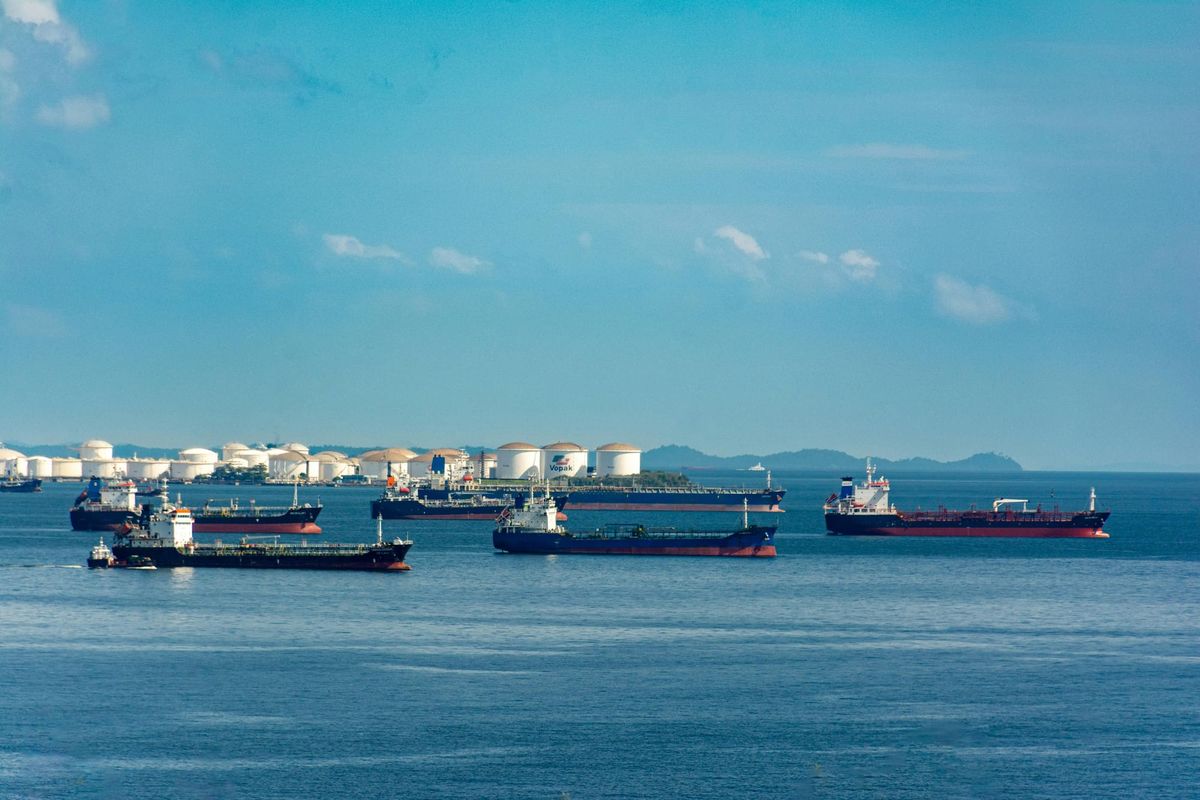
When Congress lifted the 40-year crude export ban in December 2015, the oil market shrugged. U.S. exports trickled out at a few hundred thousand barrels per day, directed mostly to Canada. Few believed the infrastructure or the volume were there to make American crude a global force.
Fast forward to 2025, and the picture has transformed beyond recognition. The U.S. now routinely exports 4 to 5 million barrels per day of crude oil — making it one of the largest crude exporters in the world, rivaling Saudi Arabia on its strongest months. WTI has evolved from a domestic benchmark to a reference price watched by refiners from Rotterdam to Riyadh. The shale revolution didn't just change American energy; it rewired global crude markets.
The Infrastructure That Made It Possible
The backbone of U.S. crude exports is the Permian Basin, connected to the Gulf Coast by an expanding web of long-haul pipelines. Plains All American's Cactus II system, Energy Transfer's Gray Oak pipeline, and EPIC Crude's Y-Grade line all funnel Permian barrels to Corpus Christi and Houston-area terminals. From there, vessels load at facilities including Enterprise Products Partners' ECHO terminal, Magellan Midstream's (now ONEOK's) facilities, and the Midland-to-ECHO pipeline system.
The export infrastructure race has been intense. Corpus Christi has emerged as the dominant U.S. crude export hub, handling roughly 60% of total U.S. crude exports at its peak. The port's relatively shallow draft compared to Louisiana's deepwater facilities has been a limiting factor — very large crude carriers (VLCCs) require reverse lightering offshore — but the economics have worked. Projects like the Texas COLT offshore terminal and Enterprise's Sea Port Oil Terminal (SPOT) have aimed to create true deepwater capability, though permitting timelines have been lengthy.
Who's Buying
The destination mix for U.S. crude has evolved with market conditions. In 2024 and 2025, Europe has been one of the most important buyers, particularly as Russian Urals crude was sanctioned and rerouted. European refiners configured for medium-sour Russian crude have had to adapt, and many found West Texas Intermediate (WTI) and Eagle Ford light sweets to be reasonable substitutes with some adjustment.
Asia is the other major destination. South Korean refiners — SK Innovation, GS Caltex — have been consistent buyers of U.S. WTI blends. Chinese purchases have fluctuated with tariff politics and economic conditions. Indian refiners have also diversified toward U.S. barrels as Reliance Industries and Indian Oil Corporation expand their refinery configurations.
This export diversification matters enormously for price discovery. When Brent-WTI spreads widen, arbitrage flows adjust. U.S. barrels sitting on the Gulf Coast effectively set a ceiling on Brent pricing, because at a wide enough spread, the economics dictate loading cargoes and shipping them east. American crude has become a global swing supply — and that's a fundamental shift in market architecture.
The Price Setting Mechanism
The phrase "U.S. as price setter" reflects a structural reality: American shale production responds to price signals within a 3-6 month lag (faster than conventional producers), and with roughly 13 million barrels per day of production, the U.S. cannot be ignored. OPEC+ still has the largest single-source influence over price, but its ability to set a price floor depends increasingly on whether U.S. production fills the gap when OPEC+ cuts.
In 2025, that dynamic played out in real time. When OPEC+ announced production cuts in early 2024, the market initially rallied. But U.S. producers, incentivized by higher prices, accelerated completions in the Permian and maintained production growth — partially capping the rally. The EIA's short-term energy outlook has repeatedly had to revise U.S. production forecasts upward as shale productivity surprised to the upside.
Structural Tailwinds
Several factors suggest U.S. export volumes remain elevated through 2026 and beyond. First, Permian production growth — even at a moderate pace — will continue to generate exportable surplus beyond domestic refinery demand. U.S. refineries are configured for heavier crude blends, and the ultralight WTI from the Permian doesn't fully substitute. Export is the natural outlet.
Second, LNG export growth indirectly supports crude markets by absorbing U.S. natural gas that would otherwise compete with oil on a BTU-equivalent basis. A structurally higher domestic gas price reduces the incentive to flare associated gas, improving the economics and ESG profile of Permian crude production.
Third, geopolitical fragmentation — sanctions on Russia and Iran, instability in Libya and Iraq — has reduced the reliable supply of alternative medium-sour crude streams available to global buyers. U.S. light crude has moved into that gap where compatible with refinery configurations.
The United States didn't plan to become a global crude price setter. It happened because the geology of the Permian Basin, the ingenuity of horizontal drilling technology, and the infrastructure investment of the 2010s converged at a moment when global supply was constrained and political will for export was present. That position, now firmly established, will define the American role in global energy markets for the decade ahead.
Crude Intelligence Report is an independent upstream oil and gas intelligence publication. Content is for informational purposes only and does not constitute investment advice, financial advice, or a recommendation to buy or sell any security. Always conduct your own due diligence before making investment decisions. The author and publisher hold no positions in any companies mentioned in this article. © 2026 Crude Intelligence Report. All rights reserved.