Carbon and Methane: What ESG Pressure Actually Changed
The ESG movement in oil and gas investing peaked somewhere around 2021–2022, when major institutional investors were divesting from fossil fuel companies, proxy battles over climate disclosure were becoming mainstream, and operators were racing to publish net-zero commitments and sustainability reports. Since then, the narrative has shifted. Energy security concerns following Russia's invasion of Ukraine, the durability of oil demand growth in developing markets, and some investors' reassessment of returns from green energy portfolios have taken the edge off ESG pressure as it relates to the upstream sector.
But here's what often gets missed in the backlash narrative: ESG pressure, despite its rhetorical retreat, actually changed several things in upstream oil and gas operations in ways that are durable and, in some cases, economically beneficial. The most significant of these changes involve methane emissions management and operational flaring reduction — not because operators became environmentalists, but because the economics worked out and the regulatory environment made avoidance costly.
Methane: From Afterthought to Priority
Methane (CH4) has a global warming potential approximately 80 times that of carbon dioxide over a 20-year horizon, making it the upstream industry's most potent greenhouse gas contribution. For years, operators paid little attention to methane emissions beyond what was required by state regulations — and even those regulations were often weakly enforced.
What changed was a combination of satellite monitoring technology, regulatory pressure, and market economics. Satellite operators including GHGSat and Planet Labs, along with nonprofit monitors using the TROPOMI instrument on the European Space Agency's Sentinel-5P satellite, made it possible to detect and attribute large methane "super-emitter" events to specific facilities from orbit. The era of plausible deniability about methane emissions ended when operators could be identified in near-real-time from space.
The EPA's methane regulations under the Inflation Reduction Act (and predecessor rules) imposed a fee structure on methane emissions above threshold levels — essentially a tax on waste. The fee schedule, starting at $900 per metric ton in 2024 and rising to $1,500 per metric ton by 2026, creates a meaningful financial incentive to find and fix methane leaks that didn't exist previously.
What Operators Have Actually Done
The industry's response to methane pressure has been uneven but meaningfully positive in aggregate. The largest operators — ConocoPhillips, EOG Resources, Chevron, ExxonMobil — have invested in leak detection and repair (LDAR) programs, replaced high-bleed pneumatic controllers with low-emission alternatives, and in some cases deployed continuous monitoring technology at compressor stations and processing facilities.
ConocoPhillips has been among the most explicit about quantifiable methane intensity improvements. The company reported a methane intensity of 0.08% (methane emitted as a share of gross natural gas production) in its 2024 sustainability report — significantly below the industry average of approximately 0.3–0.5% estimated by independent researchers. Whether one trusts ConocoPhillips' self-reported data or not, the investment in monitoring infrastructure is real and represents a genuine operational shift.
For smaller operators and private companies, the response has been more variable. PE-backed operators with 5-year investment horizons have been slower to invest in methane monitoring infrastructure that may not pay back within their ownership period. This is the industry's accountability gap: regulations and satellite monitoring have improved methane performance at large operators while leaving smaller producers less scrutinized.
Flaring: A Measurable Win
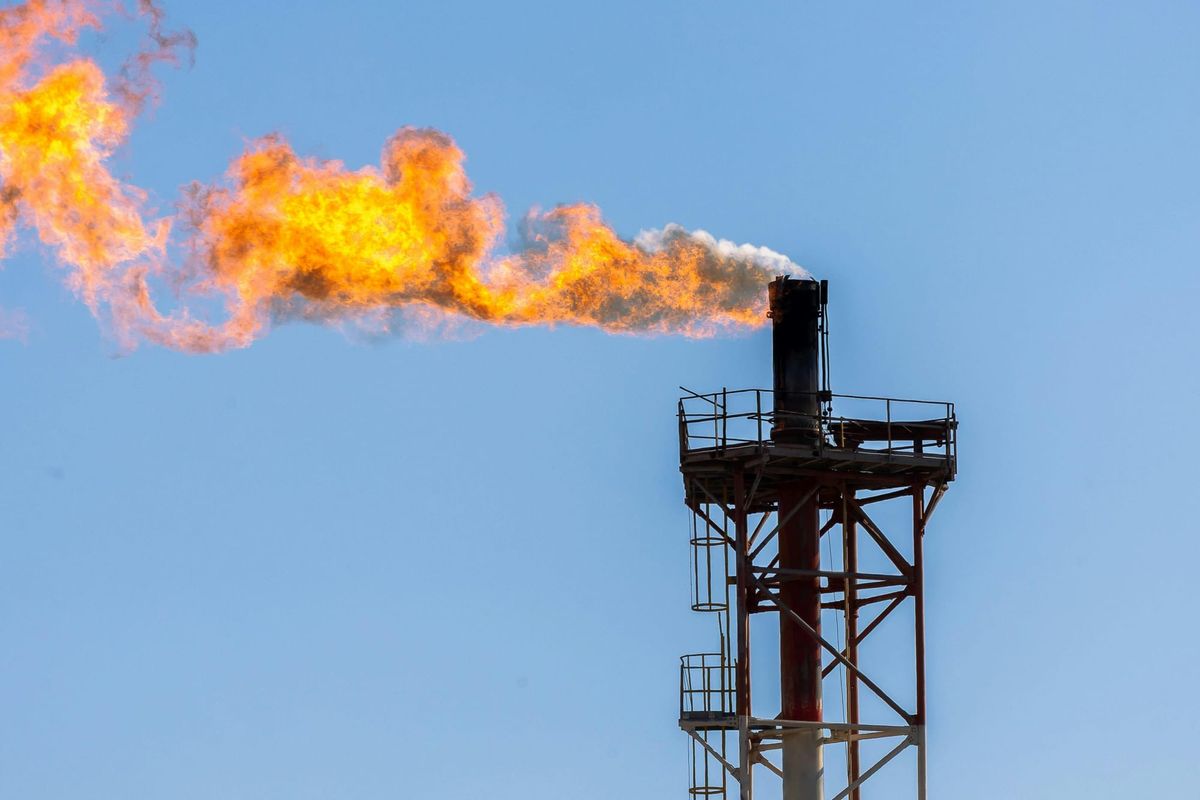
On the question of routine flaring — burning associated natural gas that operators can't economically capture — the data tells a clearer improvement story. Texas flaring intensity (gas flared as a share of total gas production) peaked around 2019–2020 during the Permian build-out, when associated gas production was outrunning pipeline takeaway capacity. At peak, Texas was flaring approximately 750–800 MMcf/d of gas — a staggering waste of energy and a meaningful source of CO2 and uncombusted methane.
By 2024–2025, Texas flaring volumes had declined to approximately 200–250 MMcf/d — a 70% reduction from peak levels. This improvement reflects pipeline infrastructure build-out (the primary driver), regulatory pressure from the Texas Railroad Commission, and operator commitments made in response to ESG investor concerns. North Dakota, which had similar flaring problems in the Bakken during its development phase, has achieved even more dramatic improvements through a mandatory flaring reduction program that the state has enforced with meaningful consequences for non-compliant operators.
The economics of flaring reduction have also improved. With LNG export demand growing, natural gas that would have been flared a decade ago can now reach global markets. The opportunity cost of flaring — leaving value in the air rather than capturing it — has increased alongside gas prices and export optionality.
The Carbon Capture Question
The most ambitious ESG commitment in the upstream space has been Occidental Petroleum's investment in direct air capture (DAC) technology through its Stratos facility in West Texas. Stratos, which began operations in 2024, is designed to capture 500,000 metric tons of CO2 per year from the atmosphere — making it the world's largest DAC facility.
Oxy's investment in DAC has been controversial among upstream investors, who question whether an oil company should be allocating capital to carbon removal technology rather than returning it to shareholders. The economics of DAC remain challenging: current capture costs are approximately $400–500 per metric ton, versus carbon credits that trade far below that level in voluntary markets. Oxy's bet is that regulatory mandates will eventually price carbon at levels that make DAC economically attractive — a reasonable long-term thesis, but one with a long payback period.
What Didn't Change
Honest accounting requires acknowledging what ESG pressure failed to change. Global oil demand has continued rising, driven by transportation, petrochemical feedstocks, and developing market growth that renewable energy alternatives haven't been able to displace at the pace advocates projected. U.S. upstream production is at record levels, not declining. The investor base for oil and gas companies has shifted from ESG-constrained institutions toward value investors, family offices, and sovereign wealth funds with fewer ideological constraints — but capital availability for the sector hasn't dried up.
The ESG movement's most lasting legacy in upstream oil and gas may not be the production levels or investment flows — both of which have proven resistant to activist pressure — but rather the operational improvements in methane management, flaring reduction, and emissions transparency that make the industry measurably better stewards of the air and atmosphere than it was a decade ago. That's not a victory for environmental advocates who wanted asset stranding; it's a more modest outcome that reflects the reality of how large industries change: incrementally, economically, and on their own terms.
Crude Intelligence Report is an independent upstream oil and gas intelligence publication. Content is for informational purposes only and does not constitute investment advice, financial advice, or a recommendation to buy or sell any security. Always conduct your own due diligence before making investment decisions. The author and publisher hold no positions in any companies mentioned in this article. © 2026 Crude Intelligence Report. All rights reserved.