
Appalachia Gas: The Patient Trade
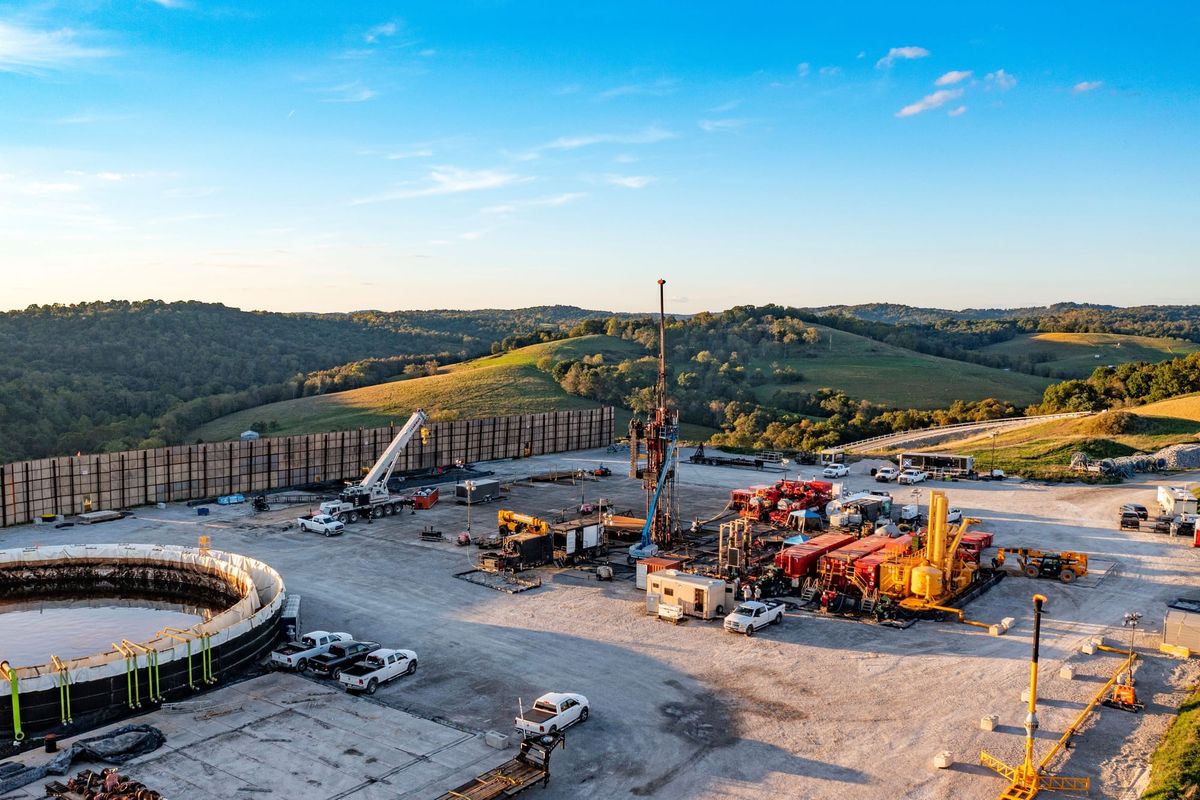
No basin in U.S. upstream has tested investor patience more thoroughly over the past three years than Appalachia. The Marcellus and Utica Shales of Pennsylvania, West Virginia, and Ohio contain some of the most prolific natural gas wells in the world — first-year production rates that dwarf those of other gas plays, sub-$2.00/Mcf break-even economics in the best locations, and a resource base that dwarfs any other basin in North America. And yet, Appalachian gas producers have been among the worst performers in the E&P universe since 2022.
The reasons are well-documented: pipeline takeaway constraints have compressed Appalachian basis differentials to deeply negative levels (Dominion South at times trading $1.50–$2.00/MMBtu below Henry Hub), demand growth has lagged the basin's prolific supply, and the regional pricing environment has punished producers even when national gas prices rallied. The result has been a bifurcated market: Appalachian gas is some of the cheapest-to-produce gas in the world, yet Appalachian producers are among the worst-positioned to monetize a national gas price rally.
But the patient trade is finally starting to pay off — slowly, unevenly, and not without continued frustration. Here's why CIR believes Appalachia represents one of the most interesting medium-term value setups in U.S. upstream.
The Takeaway Constraint Story
The fundamental problem in Appalachia is infrastructure. The basin is landlocked relative to the major demand centers and export points that would command premium pricing. Pipelines run south to the Gulf Coast (where LNG export demand is growing) and northeast to New England and Canadian markets (where demand is seasonal and infrastructure limited). Several critical pipeline projects that would have alleviated constraints — including the Atlantic Coast Pipeline and the PennEast Pipeline — were cancelled or substantially delayed due to regulatory and legal challenges.
The consequence has been structural: Appalachian producers cannot grow freely without risking pricing themselves out of the market. When too many molecules chase too few pipeline slots, basis differentials collapse and realized prices fall. This has forced disciplined production management — deliberately constraining output to match available takeaway.
EQT Corporation, the largest Appalachian producer, has been explicit about this strategy. CEO Toby Rice has articulated a vision in which EQT plays a role not just as a producer but as an infrastructure developer, advocating for new pipeline capacity and LNG-linked export infrastructure. EQT's acquisition of Equitrans Midstream — the midstream arm of the same corporate family — was a direct bet on solving the takeaway problem by owning more of the pipe.
What Has Changed
Several developments through 2024–2025 have shifted the Appalachian calculus, even if only modestly at the margin.
First, the Mountain Valley Pipeline (MVP) — a long-delayed project stretching from West Virginia to Virginia — achieved completion and entered service in 2024 after years of legal battles. MVP adds roughly 2 Bcf/d of new southbound capacity, providing meaningful relief for producers with access to the line. While not a transformative solution to Appalachian constraints, it is real incremental relief.
Second, LNG-linked demand is beginning to pull Appalachian gas south to serve Gulf Coast export terminals. While Haynesville remains the preferred feeder basin for Gulf LNG due to proximity, expanding LNG export demand creates tighter national gas markets that ultimately benefit Appalachian producers through improved Henry Hub pricing even if basis remains wide.
Third, the consolidation wave has improved the competitive dynamics for the largest Appalachian operators. Range Resources and Antero Resources, while smaller than EQT, have rationalized their operations and improved capital efficiency. Operators with direct pipeline contracts to premium markets — New England LDCs, New York utilities — have been able to capture price uplift that the spot market doesn't show.
The Investment Case
The patient trade in Appalachia is a thesis built on several pillars. First, the basin's low-cost production base means that even at today's compressed realized prices, the best operators (EQT primarily) generate positive free cash flow. The business works — just not as profitably as the resource would suggest.
Second, as LNG export capacity expands toward 20+ Bcf/d nationally, the structural demand lift will eventually tighten the gas market enough to improve Appalachian basis. This may take 2–3 years to fully materialize, but the trajectory is clear. Investors who build Appalachian equity positions before the full demand uplift arrives are essentially buying the optionality on a structural improvement in regional pricing.
Third, Appalachian natural gas is among the lowest-carbon-intensity gas produced in the United States. The basin has relatively limited flaring, low methane intensity per unit of production (particularly for the best-operated wells), and a growing number of certified "responsibly sourced gas" (RSG) certifications. This matters for European LNG buyers and domestic industrial customers with carbon commitments.
The risk to the thesis is familiar: takeaway constraints persist longer than expected, national gas prices fail to recover meaningfully, and/or additional pipeline projects face regulatory cancellation. These risks are real and have caused multiple "this time is different" Appalachian theses to fail over the past decade.
But the resource is real, the costs are low, and the demand signal from LNG is genuine. For investors with a 3–5 year time horizon and tolerance for basis volatility, Appalachian gas producers offer asymmetric upside. The patient trade, as always, requires patience.
Crude Intelligence Report is an independent upstream oil and gas intelligence publication. Content is for informational purposes only and does not constitute investment advice, financial advice, or a recommendation to buy or sell any security. Always conduct your own due diligence before making investment decisions. The author and publisher hold no positions in any companies mentioned in this article. © 2026 Crude Intelligence Report. All rights reserved.